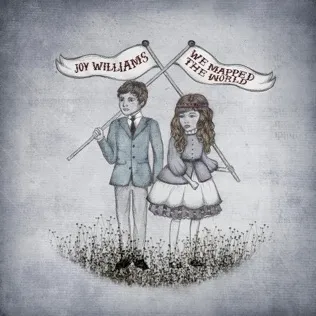
Joy Williams - Tightrope Lyrics
Lyrics
Come walk a tightrope with me
High up, with nothing but courage and gravity
We could fall
Just take my hand, hold it now
We'll keep our wits if we just don't look down, at all
We could fall
Here we go on wire round, past the edge
Daring attention, of heights we dread
Oh fall or fly
We'll never know if we don't try
I can't tell if I'm more afraid
Of this balancing string or of
Simply staying the same
So give me a wire round past the edge
Daring attention of heights we dread
Oh fall or fly
We'll never know if we don't try
So lets go on a wire round, past the edge
Daring attention of heights we dread
Oh, fall or fly
We'll never know if we don't try
Oh, it's high
High time
It's a fall life
Video
Joy Williams-Tightrope
Meaning & Inspiration
Joy Williams' "Tightrope," released as part of her *We Mapped the World - EP* on April 5th, 2010, offers a potent metaphor for the courageous leaps of faith required in life, a theme that resonates deeply with biblical principles of trust and venturing into the unknown. The song doesn't explicitly detail a specific narrative event, but rather captures the universal human experience of standing on the precipice of change and the internal struggle that precedes it. The "tightrope" itself is a powerful symbol for the precarious journey of growth, often involving vulnerability and the potential for "falling." Yet, Williams compellingly argues that the greater fear isn't the risk of failure, but the paralysis of "simply staying the same." This sentiment echoes the biblical call to move forward, to not be stagnant in our faith or our purpose.
The core message of "Tightrope" is an invitation to embrace the uncertainty of life with courage and a partner by your side. The repeated plea to "Come walk a tightrope with me" suggests that while the journey is personal, it isn't solitary. This mirrors the Christian understanding that God is with us in every step, even when the path is unclear. The emphasis on "courage and gravity" acknowledges the very real challenges and consequences of our choices, but frames them not as insurmountable obstacles, but as elements to navigate. The act of taking a hand and choosing "not [to] look down" speaks to a conscious decision to focus on the present journey and the support offered, rather than dwelling on potential pitfalls. This aligns with scriptures like Philippians 3:13-14, where Paul urges, "Brothers and sisters, I do not consider myself yet to have taken hold of it. But one thing I do: Forgetting what is behind and straining toward what is ahead, I press on toward the goal to win the prize for which God has called me together in Christ Jesus." The song's refrain, "Oh fall or fly / We'll never know if we don't try," is a direct exhortation to action, a powerful reminder that inaction itself can be a form of stagnation, a failure to embrace the potential God has laid out for us. This resonates with the parable of the talents in Matthew 25, where the servant who buried his talent out of fear was reprimanded for his lack of initiative, while those who used theirs were rewarded. Williams' sentiment that she can't tell if she's more afraid of the "balancing string or of simply staying the same" is a profound exploration of the anxieties that hold us back. It speaks to the comfortable complacency that can prevent us from pursuing God's will, a state that James warns against in James 4:17: "Anyone, then, who knows the good they ought to do and doesn’t do it, sins." The song ultimately champions the courageous spirit needed to step out, to embrace the heights and the risks, because the reward of discovery, of growth, and of fulfilling our potential, far outweighs the fear of the unknown. It is a spiritual call to trust the process, to believe in the unseen, and to take the next step, no matter how uncertain the ground may feel beneath our feet.