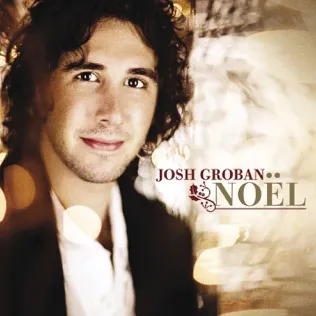
Josh Groban - O Come All Ye Faithful Lyrics

Album: Noël
Released: 09 Oct 2007
iTunes Amazon Music

Lyrics

O come let us adore him,
O come let us adore him
Christ the Lord.
Come and behold him, born the King of angels;
O come let us adore him,
O come let us adore him
Christ the Lord

Sing choirs of angels, sing in exultation,
O sing all ye citizens of heaven above;
Glory to God, Glory in the highest:

O come, let us adore him,
O come, let us adore him
Christ the Lord.

Yes, Lord, we greet thee,
Born this happy morning;
Jesus, to thee be the glory given;
Word of the Father, now in flesh appearing:
O come, let us adore him,
O come, let us adore him
Christ the Lord.

Video

Josh Groban - O Come All Ye Faithful (feat. the Mormon Tabernacle Choir) [Official HD Audio]

Thumbnail for O Come All Ye Faithful video

Meaning & Inspiration

Released on December 15, 2016, Josh Groban's rendition of the beloved Christmas carol "O Come All Ye Faithful," featuring the majestic Mormon Tabernacle Choir, offers a profound musical invitation to journey back to the heart of the Nativity story. This performance doesn't just present a classic hymn; it embodies a vibrant call to worship, urging souls to turn their gaze towards Bethlehem, the birthplace of the King. The carol itself, with roots stretching back centuries, serves as a timeless summons to all who believe to draw near to the Christ child, not merely as observers but as active participants in adoration. It is a song that acknowledges the divine paradox: the almighty Creator stooping to enter creation as a vulnerable infant, an event foretold by prophets and sung about by angels.

Groban's voice, rich and reverent, takes center stage, carrying the weight and wonder of the message. He doesn't just sing the words; he inhabits the awe and reverence they express. The presence of the Mormon Tabernacle Choir elevates the performance to an almost ethereal level, their vast, unified sound creating a sense of grandeur and celestial glory that mirrors the angelic host proclaiming "Glory to God in the highest" (Luke 2:14). Together, voice and choir build a sonic tapestry that captures both the humble setting of the manger and the cosmic significance of the event occurring within it. The music swells with a sense of gathering, of coming together in unity, reflecting the carol's central theme of communal worship before the incarnate God.

This invitation to "come and behold Him" directly echoes the shepherds' actions in Luke 2, who, after hearing the angels' message, said to one another, "Let us go over to Bethlehem and see this thing that has happened, which the Lord has made known to us" (Luke 2:15). They went with haste and found Mary and Joseph, and the baby lying in a manger. The carol's call is for us to make that same journey, not physically to ancient Bethlehem, but spiritually to encounter the living Christ. It speaks to the truth found in John 1:14, that "the Word became flesh and dwelt among us, and we beheld His glory, the glory as of the only begotten of the Father, full of grace and truth." We are called to behold not just a historical figure, but the very embodiment of God's glory and truth.

Furthermore, the song emphasizes that the one we come to behold is "the King of Angels." This title points to the divine nature of the child. He is not merely a prophet or a good teacher, but the one whom all heavenly beings serve and worship. Hebrews 1:6 says, "And again, when He brings the firstborn into the world, He says: 'Let all the angels of God worship Him.'" The song calls us to join that heavenly chorus of adoration, recognizing the child in the manger as the fulfillment of Isaiah 9:6, "For unto us a Child is born, Unto us a Son is given; And the government will be upon His shoulder. And His name will be called Wonderful, Counselor, Mighty God, Everlasting Father, Prince of Peace." This understanding transforms the simple act of coming to behold Him into an act of recognizing and honoring the sovereign ruler of all creation, who humbly came in human form.

The final verses, particularly the recurring plea to "come let us adore Him, Christ the Lord," encapsulate the ultimate purpose of the carol and this stirring performance. Adoration is the highest response to the revelation of God in Christ. Philippians 2:9-11 states, "Therefore God also has highly exalted Him and given Him the name which is above every name, that at the name of Jesus every knee should bow, of those in heaven, and of those on earth, and of those under the earth, and that every tongue should confess that Jesus Christ is Lord, to the glory of God the Father." Groban and the choir's rendition inspires this sense of bowing down in heart and spirit before the one who is worthy of all worship. It's a powerful reminder that Christmas is not just a story to remember, but an invitation to respond with adoration to the King who came down for us. This performance serves as a magnificent vessel for that timeless, essential call to come and adore Christ the Lord.

Loading...
In Queue
View Lyrics