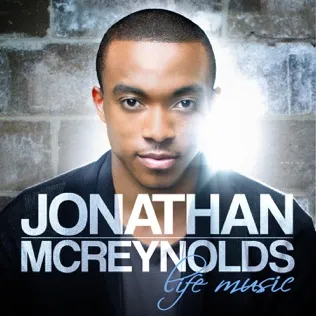
Jonathan McReynolds - Lovin' Me Lyrics
Lyrics
I'm nowhere close to a perfect man
And it takes a supernatural love to even understand
That beyond the walls, behind the mask and confident smile
Was a broken man trying to grow up and make life worthwhile
And I know there were times that you probably shouldn't
But I thank you for always loving me
And I know anyone else they probably wouldn't
So I thank you for always loving me
Now I know there were days I looked at myself
I felt like less of a person compared to everyone else
What about this flaw too big too small, can I exchange?
And tryna make up for where I fell short, I let sense slip away
But when I look in the mirror and don't like what I see
Oh, I just thank you for always loving me
And I know I get bad but you wait patiently
I just thank you for always loving me
Oh, I just thank you for always loving me
I wanna thank you for always loving me
So you just keep loving me (loving me)
You just keep loving me (loving me)
And you don't let go
You just keep loving me (loving me)
I just wanna thank you for always loving me
And though I know I don't have everything that it takes
You keep loving me (loving me)
And regardless of every mistake that I make
You keep loving me
And it probably don't matter what I do or say
You keep loving me
And even with the pimples on my face
You keep loving me
So you just keep loving me, loving me
Keep loving me, loving me
I just wanna thank you for always loving me
Thank you for always loving me
Video
Jonathan McReynolds - Lovin' Me (Official Video)
Meaning & Inspiration
Jonathan McReynolds captures a specific, uncomfortable tension in "Lovin' Me." We often treat grace as a light, ethereal concept, something we hum along to on Sunday mornings, but McReynolds forces a collision between the human ego and the radical nature of divine affection.
When he sings, "What about this flaw, too big, too small, can I exchange?" he is articulating the exhausted state of the soul under the law. We are perpetual merchants of our own self-worth, constantly looking at the "mirror"—a recurring image in his lyrics—and attempting to barter our internal defects for a sense of normalcy. This is the condition of the post-Fall creature: we spend our brief lives trying to curate an image that might be acceptable to others, if not to God.
The theological problem here is the misconception that God’s love is a response to our successful self-management. We assume that if we can just smooth over the "pimples"—the physical or spiritual jagged edges—we become more worthy of His attention. But this ignores the doctrine of total depravity. If we actually understood the depth of our corruption, we would realize that no amount of "growing up" or "making life worthwhile" satisfies the holiness of the Creator. We are not just broken; we are dead in our trespasses.
McReynolds touches on something vital when he notes that "it takes a supernatural love to even understand" why God remains. He is describing the doctrine of Immutability—the idea that God does not change His mind based on our fluctuating performance. When we look in the mirror and loathe what we see, we are judging ourselves based on a fluctuating, subjective standard. God, however, views us through the lens of the Finished Work. He does not love us because we have fixed the flaws; He loves us because He has already reconciled us to Himself through the propitiation of the Son.
There is an unsettling quality to this song that I find refreshing. Most modern lyrics insist that we are "beautiful" or "enough" precisely because of who we are. McReynolds flips the script. He admits he is not "a perfect man" and that "anyone else... probably wouldn't" love him. He locates the love outside of himself, entirely in the patient, persistent character of God. It is a necessary shift from self-esteem to God-esteem.
Yet, I am left with a question regarding the song's ending. He says, "It probably don't matter what I do or say / You keep loving me." While this points toward the security of the believer, it risks drifting into antinomianism if we aren't careful. Does our conduct matter? Biblically, God’s love for His elect is fixed, but His discipline for His children is also a reality of that relationship. Perhaps that is the "unfinished" nature of the walk of faith: we rest in the security of an unchanging God while simultaneously wrestling with the reality that His love is not a license for apathy, but the very force that demands our transformation.
McReynolds isn't giving us a theological treatise, but he is pointing toward the only thing that actually sustains a person: the realization that when we have nothing to bring to the table—when we are merely a collection of flaws and failures—the Creator does not look away. He waits. And that, in itself, is enough to stop the self-negotiation.