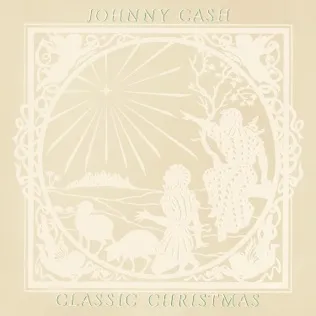
Johnny Cash - Away In a Manger Lyrics

Album: Classic Christmas
Released: 01 Dec 1980
iTunes Amazon Music

Lyrics

Away in a manger,
No crib for His bed,
The little Lord Jesus
Lay down his sweet head.
The stars in the sky
Looked down where He lay
The little Lord Jesus,
Asleep on the hay.

The cattle are lowing,
The poor Baby wakes,
But little Lord Jesus,
No crying He makes;
I love Thee, Lord Jesus,
Look down from the sky
And stay by my cradle
Till morning is nigh.

Be near me, Lord Jesus,
I ask Thee to stay,
Close by me forever,
And love me, I pray!
Bless all the dear children
In Thy tender care
And take us to heaven,
To Live with Thee there.

Video

Johnny Cash - Away In a Manger

Thumbnail for Away In a Manger video

Meaning & Inspiration

Johnny Cash's interpretation of "Away In a Manger," released on December 1, 1980, as part of his *Classic Christmas* album, offers a profound reflection on the Nativity that resonates deeply with the core tenets of Christian faith. This rendition, delivered in Cash’s signature baritone, imbues the familiar carol with an added layer of sincerity and gravitas, drawing the heart into the quiet awe of Christ's humble arrival. The song itself, a gentle lullaby, paints an intimate picture of the infant Jesus, far removed from earthly grandeur, yet radiating divine peace, and ultimately transforms into a tender prayer for His abiding presence and eternal care.

The first stanza immediately establishes the profound humility of the Incarnation, describing Jesus "Away in a manger, No crib for His bed." This poignant imagery directly echoes the biblical account in Luke 2:7, which states, "she gave birth to her firstborn son and wrapped him in swaddling clothes and laid him in a manger, because there was no place for them in the inn." Cash's steady voice underscores the quiet starkness of this scene, emphasizing that the King of Kings was born in the most unassuming circumstances. He lay "asleep on the hay," a stark contrast to the palaces and comfort one might expect for a deity, reflecting the self-emptying love described in Philippians 2:7, where Christ "made himself nothing, taking the form of a servant." The stars looking down where He lay serve as a gentle reminder of creation itself witnessing the arrival of its Creator, a scene of cosmic significance unfolding in earthly simplicity.

The carol progresses to a subtle yet powerful assertion of Christ's divine nature amidst human vulnerability. When "the cattle are lowing, the poor Baby wakes," yet "No crying He makes," this line suggests a supernatural peace inherent in the infant Jesus. While a poetic rendering, it speaks to the unique composure and inherent divinity of the Prince of Peace, fulfilling the prophecy of Isaiah 9:6. This segues into a deeply personal declaration of faith: "I love Thee, Lord Jesus, Look down from the sky." This fervent expression of adoration, coupled with the request to "stay by my cradle till morning is nigh," mirrors the human yearning for divine companionship and protection, a sentiment often found in the Psalms, such as Psalm 4:8, "In peace I will both lie down and sleep; for you alone, O Lord, make me dwell in safety." It’s a plea for constant, comforting presence in one's most vulnerable moments.

The final stanza expands this personal prayer into a universal plea, culminating in the ultimate hope of the Christian faith. The words "Be near me, Lord Jesus, I ask Thee to stay, Close by me forever, And love me, I pray!" articulate a deep desire for an unbroken, eternal relationship with Christ. This longing for perpetual intimacy resonates with Jesus’ promise in John 15:4, "Abide in me, and I in you," and His assurance in Matthew 28:20, "I am with you always, to the end of the age." The prayer then extends beyond the individual, embracing a compassionate vision for all, "Bless all the dear children In Thy tender care." This line reflects Jesus' own affection for children, as seen in Matthew 19:14, where He said, "Let the little children come to me and do not hinder them, for to such belongs the kingdom of heaven." Finally, the petition "And take us to heaven, To Live with Thee there," articulates the ultimate Christian hope of eternal life with God, echoing Jesus' promise in John 14:3, "And if I go and prepare a place for you, I will come again and will take you to myself, that where I am you may be also." Johnny Cash’s solemn, yet reassuring delivery transforms this carol from a simple children's song into a profound affirmation of faith, hope, and the enduring promise of Christ's humble birth.

Loading...
In Queue
View Lyrics