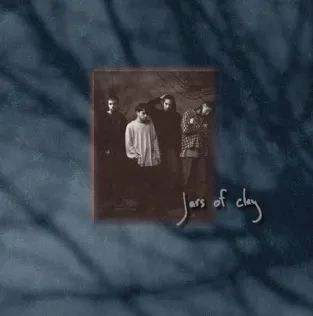
Jars of Clay - Art In Me Lyrics
Lyrics
Images on the sidewalk speak of dream's descent
Washed away by storms to graves of cynical lament
Dirty canvases to call my own
Protest limericks carved by the old pay phone
In your picture book I'm trying hard to see
Turning endless pages of this tragedy
Sculpting every move you compose a symphony
You plead to everyone, "See the art in me"
"See the art in me"
"See the art in me"
Broken stained-glass windows, the fragments ramble on
Tales of broken souls, an eternity's been won
As critics scorn the thoughts and works of mortal man
My eyes are drawn to you in awe once again
In your picture book I'm trying hard to see
Turning endless pages of this tragedy
Sculpting every move you compose a symphony
You plead to everyone, "See the art in me" (See the art in me)
"See the art in me" (See the art in me)
"See the art in me"
In your picture book I'm trying hard to see (trying hard to see)
Turning endless pages of this tragedy
Sculpting every move you compose a symphony
And you plead to everyone, "See the art in me" (See the art in me)
"See the art in me" (See the art in me)
"See the art in me"
Video
Art In Me
Meaning & Inspiration
Jars of Clay’s self-titled debut album, released on October 24, 1995, introduced the world to their distinctive blend of alternative rock and profound spiritual contemplation, a testament encapsulated powerfully in the song "Art In Me." This particular piece delves into the raw, often messy landscape of human existence, contrasted with a profound invitation to perceive divine artistry amidst the apparent chaos. The narrative begins with vivid, melancholic imagery of "dream’s descent" and "cynical lament," painting a picture of shattered hopes and the struggle against disillusionment. These initial lines set a tone of human imperfection and the consequences of a fallen world, where our own attempts at meaning might feel like "dirty canvases" or mere "protest limericks" – imperfect, fleeting expressions in the face of overwhelming sorrow. This beautifully reflects the human condition described in Scripture, where despite our best efforts, we often fall short, struggling with the weight of sin and the brokenness of the world around us, as Romans 3:23 reminds us that all have sinned and fall short of the glory of God.
The core of the song unfolds with the central plea, "See the art in me," uttered by an omnipotent, creative force who is "sculpting every move" and composing a grand "symphony." Within the context of Jars of Clay's spiritually charged artistry, this "you" unequivocally points to God, the divine Creator. The song presents a fascinating paradox: the human experience is framed as a "tragedy" within a "picture book" the narrator is "trying hard to see," yet it is this very divine Artist who is pleading for humanity to recognize His handiwork. This is not a plea for human validation, but an invitation for us to discern God’s eternal purpose and inherent beauty woven into the fabric of creation and even into our redeemed selves. Just as Psalm 19:1 declares, "The heavens declare the glory of God; the skies proclaim the work of his hands," so too does the divine Artist invite us to see His signature not only in the cosmos but in the very process of our lives, transforming our "dirty canvases" into vessels of His grace.
The lyrics further develop this theme by acknowledging profound brokenness, depicting "broken stained-glass windows" and "fragments ramble on," yet immediately pivots to "tales of broken souls, an eternity’s been won." This profound shift speaks directly to the redemptive work of Christ. Despite the shattered nature of humanity and the world, the victory of eternity has already been secured through God's ultimate sacrifice. This echoes John 3:16, where God's love for the world through His Son offers eternal life, transforming our fragmented existence into a story of triumph. Even as the "critics scorn the thoughts and works of mortal man," finding fault and dissecting human flaws, the narrator’s "eyes are drawn to you in awe once again." This beautifully illustrates the contrast between human judgment and the overwhelming majesty and redemptive power of God. While humanity might critique and dismiss, those who seek God find themselves captivated by His unwavering presence and perfect plan, a truth powerfully conveyed in Isaiah 55:8-9, which states God's thoughts and ways are far above our own.
Ultimately, "Art In Me" serves as a profound meditation on perceiving the divine in the midst of human struggle. It reminds us that our lives, no matter how broken or imperfect they may seem, are part of a larger, divinely orchestrated symphony. God, the ultimate Artist, is not merely observing our tragedy; He is actively sculpting, composing, and inviting us to see His intricate design and redemptive purpose within it. Our task is to diligently turn the pages of His "picture book," His revealed truth and creation, actively seeking to understand His profound artistry. This continuous process of seeking and discerning allows us to recognize that even in our fallen state, we bear the imago Dei – the image of God – and through redemption, become His "handiwork, created in Christ Jesus to do good works," as Ephesians 2:10 powerfully asserts. The song is a powerful call to look beyond the immediate pain and cynicism, to gaze upon the Creator with renewed awe, and to discover the magnificent, eternal "art" that God continually reveals within Himself, within His creation, and within the journey of every redeemed soul.