Haste the Day - Vertigo Lyrics
Lyrics
Vertigo hits.
Tonight we dance.
What dance has brought us to a disfigured ballroom where we march in fine rows and our heels, our heels touch the ground.
Beauty forsaken.
Our weakness comes from desire for solace.
Tonight we cry.
Trust in the falling walls.
Scars in the face of fear.
Scars on our hearts.
No use screaming when all that hear are deaf ears.
Beauty forsaken.
Our weakness comes from desire for solace.
Tonight we cry.
Trust in the falling walls.
Video
Vertigo
Meaning & Inspiration
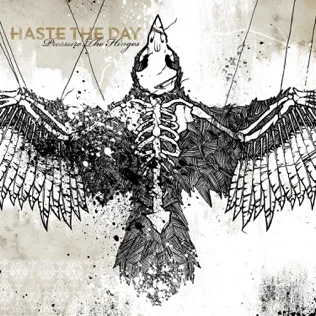
Released on January 1, 2007, as part of the album *Pressure the Hinges*, Haste the Day’s "Vertigo" plunges listeners into a profound exploration of spiritual disorientation and the human search for genuine solace amidst a crumbling world. This isn't merely a song to be heard; it's a resonant call to introspection, a stark mirror reflecting the anxieties of a society adrift, yet ultimately pointing towards an unwavering divine truth. The band, known for its powerful Christian message woven into a metalcore sound, uses this track to articulate a deep yearning for meaning beyond the fleeting promises of earthly existence.
The song immediately confronts us with the jarring sensation of "Vertigo hits," a spiritual dizziness that speaks to the confusion and moral ambiguity pervasive in our modern age. This feeling of being unmoored quickly transitions into a vivid image of a "disfigured ballroom where we march in fine rows," illustrating a world where conformity dictates our steps, forcing us into pre-ordained patterns that strip away genuine joy and purpose. It's a powerful metaphor for the societal pressures that compel us to walk a path not truly our own, forsaking authentic expression for the sake of fitting in. This echoes Romans 12:2, which implores us not to conform to the pattern of this world but to be transformed by the renewing of our minds, lest we lose our spiritual footing in the dance of life.
From this unsettling scene emerges a profound confession: "Beauty forsaken. Our weakness comes from desire for solace." Here, the song laments the abandonment of true, spiritual beauty – often found in purity, truth, and genuine connection – in favor of superficial comforts. Our inherent human desire for peace and security, when misdirected, becomes a source of profound weakness, leading us to seek solace in things that ultimately cannot satisfy or sustain us. This resonates deeply with Jeremiah 17:9, which reveals the human heart as deceitful and desperately sick, often seeking comfort in deceptive places rather than in the steadfast love of God. Such misplaced desire inevitably leads to the lament of "Tonight we cry," a raw admission of the sorrow that comes from chasing after empty promises and realizing the futility of our self-made securities.
The despair deepens with the poignant observation, "No use screaming when all that hear are deaf ears." This line captures the profound loneliness and frustration of feeling unheard, whether by fellow humans or by a seemingly indifferent world. It speaks to moments of crisis when our cries for help feel like they echo into a void, unacknowledged and uncomforted. While this sentiment powerfully conveys human desolation, it also subtly prepares the ground for a spiritual contrast. For while human ears may be deaf, Scripture assures us that God’s ears are always open to the cries of the righteous, as Psalm 34:17 declares, "The righteous cry out, and the Lord hears them; he delivers them from all their troubles." This divine attentiveness stands in stark opposition to the world’s silence.
The true spiritual pivot of "Vertigo" arrives with the arresting command: "Trust in the falling walls." This isn't an invitation to despair but a challenging call to radical faith. It signifies trusting God *precisely* when everything we thought was stable – our worldly foundations, our false comforts, our self-reliance – is collapsing around us. These "falling walls" represent the demolition of temporary structures, revealing the need for an eternal, unshakeable foundation. Hebrews 12:27-28 speaks of God shaking everything that can be shaken, "so that what cannot be shaken may remain." The song encourages us to place our trust not in the walls themselves, but in the God who orchestrates their fall, clearing the way for His enduring kingdom. This act of trust amidst demolition is an affirmation that true security is found not in what we build, but in who God is.
The song then acknowledges the enduring impact of life's battles: "Scars in the face of fear. Scars on our hearts." These lines recognize the reality of pain and suffering, the marks left by our struggles and anxieties. They are not dismissed but presented as inherent to our journey. Yet, within a faith context, these scars become part of a larger narrative of resilience and redemption. As 2 Corinthians 4:16-18 beautifully reminds us, though our outer self is wasting away, our inner self is being renewed day by day, and our light and momentary troubles are achieving for us an eternal glory that far outweighs them all. Our scars, therefore, are not just emblems of past pain, but testimonies to God's preserving grace and the transformative power of a faith that endures even when the walls come crashing down. "Vertigo" by Haste the Day ultimately serves as a compelling spiritual anthem, urging us to recognize the instability of earthly securities and to courageously place our trust in the God who remains steadfast, even as the world around us shifts and falls. It’s a powerful reminder that true solace and an unwavering foundation are found only in Him.