Haste the Day - The Un-Manifest Lyrics
Lyrics
Right now, he awaits at the threshold
Don't let him in
No, don't let him in
Though he is dressed like the rest of us
He has the jackal's eyes
The jackal's eyes
Oh, the immortal is coming
And with him comes the storm
Black smoke fills the air
With anger as black as the cellars of hell
He wears your shame like a cloak made for kings
They will come like...
Parasites swarming in
Dressed in lies of normality
To appease the death of innocence
And its growing appetite
Abandon all hope!
Abandon all hope!
Abandon all hope!
Parasites swarming in
Dressed in lies of normality
To appease the death of innocence
And its growing appetite
Parasites swarming in
Dressed in lies of normality
To appease the death of innocence
And its growing appetite
Video
Haste The Day - Un-Manifest
Meaning & Inspiration
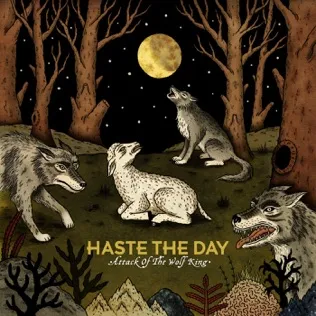
Haste the Day’s "The Un-Manifest," released in 2010 on their album *Attack of the Wolf King*, delivers a potent, unvarnished warning, a sonic alarm bell against an insidious spiritual threat. Far from being a mere narrative, this song plunges the listener into the heart of an unseen conflict, articulating the urgent need for vigilance against an enemy that actively seeks entry and deception. It depicts a chilling portrayal of a malevolent entity, a "he" who lurks at the very edge of our consciousness, described with unsettling clarity: outwardly indistinguishable, "dressed like the rest of us," yet possessing the unmistakable "jackal's eyes" of true malice. This isn't merely a fictional monster; it’s a vivid representation of the Adversary, the spiritual force of evil described in Scripture.
The profound message of "The Un-Manifest" resonates deeply with biblical truths concerning spiritual warfare. The opening lines, "Right now, he awaits at the threshold / Don't let him in," serve as an immediate, imperative command echoing James 4:7, which instructs us to "Resist the devil, and he will flee from you." This "he," the "immortal" entity, is portrayed as a bringer of chaos—a "storm" of "black smoke" and "anger as black as the cellars of hell." This imagery aligns with how Scripture describes Satan, not as a friendly figure, but as one who "comes only to steal and kill and destroy" (John 10:10). The song effectively captures the destructive nature and terrifying presence of spiritual evil, emphasizing its profound anger and its origin outside of divine light.
A particularly piercing line reveals the enemy's most cunning tactic: "He wears your shame like a cloak made for kings." This exposes the adversary’s strategy of leveraging our past mistakes, our hidden guilt, and our personal shortcomings not just to condemn us, but to empower himself in our lives. Instead of leading to repentance and forgiveness, this shame is twisted into a garment of false authority, binding individuals in self-condemnation. This stands in stark contrast to the liberating truth found in Romans 8:1, "There is therefore now no condemnation for those who are in Christ Jesus," or 1 John 1:9, which promises that "If we confess our sins, he is faithful and just to forgive us our sins and to cleanse us from all unrighteousness." The enemy thrives on shame, while God offers freedom from it.
The song further elaborates on the enemy's deceptive infiltration through the image of "Parasites swarming in / Dressed in lies of normality." This describes how evil often disguises itself, appearing innocuous, even appealing, to gain a foothold. This powerful metaphor of "lies of normality" directly recalls 2 Corinthians 11:14, where Paul warns that "Satan himself masquerades as an angel of light." These "parasites" come "To appease the death of innocence / And its growing appetite," highlighting how evil corrupts and consumes purity, feeding on spiritual decay. It speaks to the slow erosion of virtue and the insatiable craving that sin fosters once allowed to take root. This aligns with Proverbs 4:23, which exhorts us to "Guard your heart above all else, for it determines the course of your life," recognizing the critical importance of protecting our inner selves from such parasitic influence.
The repeated, desperate cry of "Abandon all hope!" serves as a chilling warning, a stark reminder of the ultimate consequence of succumbing to the spiritual attacks described. It signifies the despair, spiritual barrenness, and utter lack of future that results from yielding to the "jackal's eyes" and the "lies of normality." This grim declaration stands in direct opposition to the profound hope offered through faith in Christ, as articulated in Romans 15:13: "May the God of hope fill you with all joy and peace as you trust in him, so that you may overflow with hope by the power of the Holy Spirit." "The Un-Manifest" is therefore not just a depiction of spiritual darkness; it is a urgent, impassioned plea for discernment and resistance. It calls us to recognize the insidious nature of evil, to guard our hearts diligently, and to remember that while the enemy seeks to steal, kill, and destroy, there is an enduring hope and strength found in resisting his advances through the power of God. It compels us to be spiritually awake, prepared to stand firm against the forces that await at the threshold, ensuring we never "let him in."