Haste the Day - My Name Is Darkness Lyrics

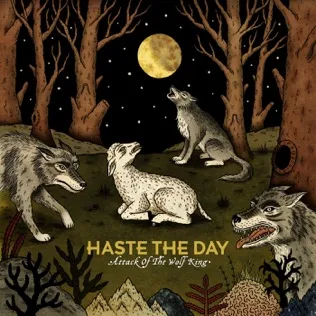
Album: Attack of the Wolf King
Released: 01 Jan 2010
iTunes Amazon Music

Lyrics

With grace we've marched to the ends of the earth to search for the hand
And when all hope is lost it will be found where the earth and the heaven collide

And darkness will show his weary head to the light
And the rich will trade their treasures for life
For something sweeter than honey
Where the earth and the heaven collide

My name is darkness and I have uncloaked my face to the light
My name is darkness and I have uncloaked my face

Video

Haste The Day - My Name Is Darkness

Thumbnail for My Name Is Darkness video

Meaning & Inspiration

Released on January 1, 2010, as part of the album *Attack of the Wolf King*, Haste the Day’s "My Name Is Darkness" stands as a potent lyrical exploration of humanity's deepest spiritual quest and the ultimate triumph of divine light. This song immediately plunges into a profound narrative, painting a vivid picture of a world in search of meaning, only to discover it in an unexpected, sacred collision. It speaks directly to the soul, challenging perceptions of despair and revealing where genuine hope resides, embodying a message that resonates deeply with timeless biblical truths.

The journey begins with a striking image: "With grace we've marched to the ends of the earth to search for the hand." This opening line speaks to humanity's inherent longing for something beyond itself, a quest for divine guidance or intervention. It acknowledges a pilgrimage, often arduous, undertaken not by strength alone but through a divine enablement—grace—in pursuit of God’s active presence. This yearning echoes throughout Scripture, as seen in passages like Psalm 42:2, where the psalmist cries out, "My soul thirsts for God, for the living God. When can I go and meet with God?" The search for "the hand" represents an earnest seeking of the Creator, a longing that persists even when the path is long and hope seems elusive.

It is precisely at this point of human extremity that the song’s central revelation emerges: "And when all hope is lost it will be found where the earth and the heaven collide." This powerful imagery points to a divine intersection, a place where the spiritual realm profoundly impacts the physical. This collision is not merely metaphorical; it evokes the ultimate intersection in Christian faith: the person of Jesus Christ. Through Him, heaven truly touched earth, offering redemption, reconciliation, and an anchor for the soul when all else fails (Hebrews 6:19). This is where the God of hope (Romans 15:13) meets our despair, transforming it into unwavering expectation. It also foreshadows the glorious future promised in Revelation 21:1-4, when God makes His dwelling among humanity, establishing new heavens and a new earth where sorrow and death are no more.

From this divine encounter, significant shifts occur. The song declares, "And darkness will show his weary head to the light," portraying darkness not as a triumphant force but as something exposed and ultimately subdued by an overwhelming radiance. This personification of darkness, perhaps representing evil itself or the hidden sins of the world, reveals its vulnerability when confronted with divine truth. John 1:5 powerfully states, "The light shines in the darkness, and the darkness has not overcome it." In the presence of God's unassailable light, every hidden thing is revealed, and every opposing force is forced to relinquish its deceitful cloak. This exposure is not for its glorification, but for its ultimate defeat, mirroring the fate of spiritual adversaries in the divine plan (Ephesians 5:11-13).

Following this revelation, a re-evaluation of worldly values takes place: "And the rich will trade their treasures for life / For something sweeter than honey." This line resonates with Jesus' profound teaching in Matthew 16:26, "For what will it profit a man if he gains the whole world and forfeits his soul?" True life, the song posits, cannot be bought with earthly riches, but is found in the encounter at the "earth and heaven collide." This "something sweeter than honey" is a clear biblical allusion, often used to describe God’s Word and His presence. Psalm 19:10 describes God's statutes as "sweeter also than honey and the honeycomb," and Psalm 119:103 similarly exclaims, "How sweet are your words to my taste, sweeter than honey to my mouth!" It is the truth, sustenance, and joy found in divine relationship that far surpasses any material wealth or earthly pleasure.

The song culminates with the assertive declaration: "My name is darkness and I have uncloaked my face to the light." This central statement can be interpreted as darkness, once hidden and insidious, being utterly exposed and unveiled by the penetrating truth of God’s light. It is a moment of forced revelation, where the deceptive guise of evil is stripped away, and its true, weary form is laid bare. Alternatively, it could be understood as humanity, acknowledging its own fallen nature and the inherent "darkness" within, coming openly into the illuminating presence of God for confession, repentance, and transformation. In either interpretation, the light is triumphant. It is a powerful affirmation that in the realm where heaven and earth meet, darkness cannot hide; it is compelled to reveal itself, setting the stage for its ultimate subjugation. This message is profoundly inspiring, reminding us that no matter how pervasive or intimidating darkness may seem, its power is always finite and ultimately subject to the enduring, conquering light of God.

Loading...
In Queue
View Lyrics