Fountainview Academy - He Leadeth Me Lyrics
Lyrics
He leadeth me: O blessed thought!
O words with heavenly comfort fraught!
Whate'er I do, where'er I be,
Still 'tis God's hand that leadeth me.
Refrain:
He leadeth me, He leadeth me,
By His own hand He leadeth me;
His faithful follower I would be,
For by His hand He leadeth me.
Sometimes mid scenes of deepest gloom,
Sometimes where Eden's bowers bloom,
By waters still, o'er troubled sea,
Still 'tis His hand that leadeth me.
Lord, I would place my hand in Thine,
Nor ever murmur nor repine;
Content, whatever lot I see,
Since 'tis my God that leadeth me.
He leadeth me, He leadeth me,
By His own hand He leadeth me;
His faithful follower I would be,
For by His hand He leadeth me.
And when my task on earth is done,
When by Thy grace the victory's won,
E'en death's cold wave I will not flee,
Since God through Jordan leadeth me
He leadeth me, He leadeth me,
By His own hand He leadeth me;
His faithful follower I would be,
For by His hand He leadeth me.
Video
He Leadeth Me | Help in Daily Living | Fountainview Academy
Meaning & Inspiration
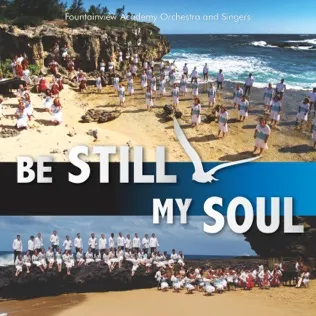
Fountainview Academy's rendition of "He Leadeth Me," released on January 1, 2010, as part of their album "Be Still My Soul," brings renewed focus to a hymn that has offered solace and steadfast assurance to countless individuals for generations. This particular recording serves as a gentle yet powerful reminder of divine guidance, preserving the timeless message of the original composition with a reverent approach that invites deep contemplation of its scriptural roots and profound meaning.
The narrative woven through "He Leadeth Me" speaks directly to the human condition, acknowledging the profound need for direction and stability in an often unpredictable world. Its core message revolves around the unwavering providence of God, who, like a shepherd, guides His flock through every phase of life. The very opening lines, describing God's leading as a "blessed thought" and "words with heavenly comfort fraught," immediately establish a foundation of peace, emphasizing that regardless of one's actions or location, it is "God's hand that leadeth me." This mirrors the comfort found in Psalm 32:8, where the Lord declares, "I will instruct you and teach you in the way you should go; I will counsel you with My loving eye on you," and Proverbs 3:5-6, which encourages trust in the Lord with all one's heart, promising that He "will make your paths straight." The song articulates a divine companionship that is both constant and intimately personal, inviting a complete surrender to this higher guidance.
The repeated refrain, "He leadeth me, He leadeth me, By His own hand He leadeth me; His faithful follower I would be, For by His hand He leadeth me," is more than just a musical anchor; it’s a deeply felt affirmation and a declaration of intent. The emphasis on "His own hand" underscores the personal and deliberate nature of God's care, distinguishing it from general providence. This commitment to being a "faithful follower" resonates with the biblical call to discipleship, as exemplified by Jesus’ invitation in Matthew 4:19, "Come, follow me, and I will send you out to fish for people." It’s an active choice to align one's life with divine purpose, recognizing that true direction comes from walking alongside the One who knows the way.
The hymn then explores the multifaceted landscape of life's journey, acknowledging that God's leadership spans both joy and sorrow. "Sometimes mid scenes of deepest gloom, Sometimes where Eden's bowers bloom, By waters still, o'er troubled sea," speaks to the universality of human experience. This reflects the reality portrayed in Psalm 23, where the shepherd leads beside "still waters" and through "the valley of the shadow of death," indicating that God's presence is not contingent upon our circumstances but is a steady anchor through them all. The contrast between "deepest gloom" and "Eden's bowers bloom," and "waters still" versus "troubled sea," beautifully illustrates that divine guidance is present whether we are experiencing moments of serene peace or navigating tumultuous storms, just as Jesus calmed the troubled sea in Mark 4:39, demonstrating His sovereignty over all conditions.
A profound moment of commitment unfolds in the verse, "Lord, I would place my hand in Thine, Nor ever murmur nor repine; Content, whatever lot I see, Since 'tis my God that leadeth me." This section beautifully articulates a complete trust and relinquishment of personal control, choosing not to "murmur nor repine," a direct contrast to the Israelites' frequent complaints in the wilderness (Exodus 16:2). Instead, it embraces a spirit of contentment and acceptance, echoing the Apostle Paul's powerful declaration in Philippians 4:11-13, "I have learned to be content whatever the circumstances... I can do all this through him who gives me strength." Placing one's hand in God's is an act of profound dependence, a recognition that He is the ultimate source of strength and comfort, as promised in Isaiah 41:13: "For I am the Lord your God who takes hold of your right hand and says to you, Do not fear; I will help you."
Finally, the hymn looks towards the ultimate horizon: life's end and the transition into eternity. "And when my task on earth is done, When by Thy grace the victory's won, E'en death's cold wave I will not flee, Since God through Jordan leadeth me." This verse offers a powerful assurance that God’s guidance extends beyond the earthly realm, even through the experience of death itself. The phrase "victory's won" points to the triumph over death promised through Christ's sacrifice, as proclaimed in 1 Corinthians 15:57, "But thanks be to God! He gives us the victory through our Lord Jesus Christ." The vivid imagery of God leading "through Jordan" evokes the Israelites' miraculous crossing into the Promised Land, serving as a powerful metaphor for the believer's passage from this life into eternal rest, guided by the very hand that led them through every previous challenge. It transforms the final journey from one of fear into one of confident anticipation, knowing that God's leadership is eternally faithful.
Fountainview Academy's "He Leadeth Me" is a testament to the enduring power of faith, encouraging anyone who encounters it to lean into the comforting assurance of God’s continuous and compassionate guidance. It is a spiritual anchor, reminding us that no matter the path—be it smooth or rugged, joyful or sorrowful, or even crossing the ultimate threshold—the divine hand remains steadfast, leading us home.