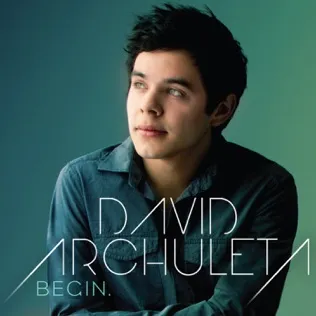
David Archuleta - Be Still, My Soul Lyrics
Lyrics
Be still, my soul: the Lord is on thy side.
Bear patiently the cross of grief or pain.
Leave to thy God to order and provide;
In every change, He faithful will remain.
Be still, my soul: thy best, thy heavenly Friend
Through thorny ways leads to a joyful end.
Be still, my soul: thy God doth undertake
To guide the future, as He has the past.
Thy hope, thy confidence let nothing shake;
All now mysterious shall be bright at last.
Be still, my soul: the waves and winds still know
His voice Who ruled them while He dwelt below.
Be still, my soul: the hour is hastening on
When we shall be forever with the Lord.
When disappointment, grief and fear are gone,
Sorrow forgot, love's purest joys restored.
Be still, my soul: when change and tears are past
All safe and blessed we shall meet at last.
Video
David Archuleta sings "Be Still My Soul" to The Tabernacle Choir
Meaning & Inspiration
David Archuleta’s rendition of "Be Still, My Soul"—the 19th-century hymn by Katharina von Schlegel—forces a confrontation between modern restlessness and the rigid demands of divine sovereignty. When Archuleta sings, "Leave to thy God to order and provide," he is not merely offering a suggestion for relaxation; he is prescribing a total abdication of the human ego’s desire to pilot its own history.
There is a distinct tension here. Modernity treats the "ordering" of our lives as a personal project, a branding exercise in self-actualization. To "leave" it to God is to admit that we are incapable of securing our own outcomes. It is a terrifying proposition. When the lyrics insist that "in every change, He faithful will remain," the claim rests entirely on the immutable character of God—His aseity. If God were not independent and self-existent, "change" would be a genuine threat to His reliability. Because He is who He is, our shifting circumstances do not trigger a shifting God.
The line that strikes with the most weight is: "All now mysterious shall be bright at last."
This is not a promise of easy explanations. It is an acknowledgment that we are currently operating within the "mysterious." We tend to demand the clarity of a ledger or a map before we offer our obedience. Yet, the theology here is anchored in the eschaton. We do not get the brightness now; we get the cross of grief or pain. We are told to bear it "patiently," which is a tall order for a culture that views suffering as an error to be debugged.
When I listen to this, I think of the Imago Dei. If we are truly made in His image, our persistent itch to control our surroundings is a fractured echo of a desire for sovereignty that we were never meant to possess. We want to be the architects of our "joyful end," but the song insists that it is the "heavenly Friend" who leads us through the "thorny ways." There is a cruelty to that, if you think about it—the path is marked by thorns, and the destination is obscured by fog.
There is a dissonance between the vocal performance, which feels intimate, and the massive, crushing weight of the doctrine being articulated. Archuleta delivers these lines with a gentle breathiness that risks trivializing the sheer agony of the "cross of grief." But the words themselves act as a bulwark. They don't offer us a hug; they offer us a command: Be still.
It is an imperative that feels unnatural. My soul rarely wants to be still; it wants to scramble for safety. To sit with the thought that "the hour is hastening on" when "sorrow [is] forgot" implies that the sorrow is not an accident of our lives, but a necessary passage. It remains an unresolved ache—this idea that we must endure the thorns to reach the restoration. It isn't a comfortable realization, but it is, at the very least, a truthful one. We are being steered toward an end we haven't designed, by a God who refuses to let us steer.