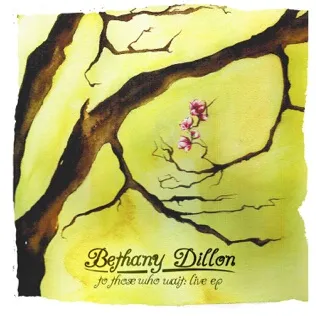
Bethany Dillon - To Those Who Wait Lyrics
Lyrics
I am waiting on You,
I am waiting on You.
You say You're good to those who wait.
My heart's discouraged,
So I come to You expectant.
You say You're good to those who wait.
Lord, today You know what I need to do,
But You can do more in my waiting than in my doing I could do.
So I won't run anymore.
I'm waiting on You.
Oh, wretched man that I am!
Free me from my distractions.
You say You're good to those who wait.
Then confession and repentance
Find me in the quiet.
You say You're good to those who wait.
Now I know You're good to those who wait.
Lord, today You know what I need to do,
But You can do more in my waiting than in my doing I could do.
So I won't run anymore.
I'm waiting on You.
Oh, my soul,
Wait upon the Lord.
Keep your lamp filled with oil.
Oh, my soul,
Be not deceived!
Wait for Him.
Don't be quick to leave.
Lord, today You know what I need to do,
But You can do more in my waiting than in my doing I could do.
So I won't run anymore.
I'm waiting on You.
Video
To Those Who Wait
Meaning & Inspiration
Bethany Dillon’s 2012 single, "To Those Who Wait," from the EP of the same name, is a profound meditation on the practice and divine benefit of patient anticipation in our walk with God. This song isn't just a pleasant tune; it’s a roadmap for navigating seasons of stillness, offering a scriptural perspective that resonates deeply with anyone feeling discouraged or uncertain about their next steps. Dillon’s lyrical journey begins with a direct acknowledgment of this waiting state, articulating a personal plea grounded in the foundational truth that God is good to those who wait. This echoes the assurance found in passages like Isaiah 40:31, which promises renewed strength for those who wait on the Lord, and Lamentations 3:25, stating, "The Lord is good to those who wait for him, to the soul who seeks him." The song moves beyond simple acknowledgment to embrace the struggle, where a discouraged heart finds solace in coming to God with expectancy, trusting that His goodness isn't contingent on our immediate understanding or action.
The core of Dillon's message lies in the powerful revelation that waiting on God can be more impactful than our own hurried doing. The lyrics articulate a significant spiritual insight: "Lord, today You know what I need to do, / But You can do more in my waiting than in my doing I could do." This is a concept deeply rooted in biblical wisdom. Consider Abraham, who waited years for the promised son, or Joseph, whose years in prison ultimately led to his ascendancy and the salvation of his family. Their stories, and indeed many others in Scripture, illustrate that God often orchestrates His most profound purposes during periods of patient waiting. This perspective encourages a surrender of our own agendas, a willingness to allow divine timing and divine strategy to unfold, as Solomon wisely wrote in Ecclesiastes 3:1, "For everything there is a season, and a time for every matter under heaven." Dillon directly addresses the human tendency to flee from discomfort or inactivity, a temptation that distracts from God's work. The plea, "Free me from my distractions," is a prayer for spiritual clarity, a desire to be present in the stillness where confession and repentance find their natural expression, leading to a deeper knowledge of God's steadfast goodness.
The song’s structure culminates in a powerful exhortation to the soul, echoing Psalm 27:14: "Wait for the Lord; be strong, and let your heart take courage; wait for the Lord!" Dillon urges the listener to keep their "lamp filled with oil," a vivid metaphor referencing the parable of the ten virgins in Matthew 25, where preparedness and readiness are paramount. This imagery speaks to a vigilant, active waiting—not a passive idleness, but a state of spiritual readiness for God's intervention and guidance. The final affirmation, "Now I know You're good to those who wait," transforms personal experience and scriptural assurance into a confident declaration. "To Those Who Wait" is more than an inspirational song; it's a theological primer on trusting God’s timing, a reminder that in the quiet crucible of waiting, profound transformation and divine power are often at work, far exceeding what our limited human efforts could achieve.