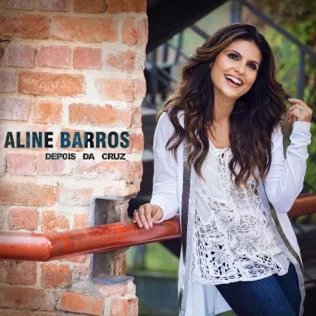
Aline Barros - Depois Da Cruz Lyrics
Lyrics
Antes da cruz, estava condenado Eu carregava o peso do pecado Até que Deus me concedeu A chance de ser regenerado
Antes da cruz, estava separado O véu ainda não tinha se rasgado De um lado, eu Do outro, Deus Mas pela cruz fomos aproximados
Depois da cruz do Salvador Mudou a história de um pecador Que era eu, longe de Deus Mas pela Graça salvação concedeu
Depois da cruz do Salvador Os sonhos mortos de um sonhador Que era eu, longe de Deus Mas pelo Seu favor meus sonhos reviveu
Antes da cruz, estava condenado Eu carregava o peso do pecado Até que Deus me concedeu A chance de ser regenerado
Antes da cruz, estava separado O véu ainda não tinha se rasgado De um lado, eu Do outro, Deus Mas pela cruz fomos aproximados
Depois da cruz do Salvador Mudou a história de um pecador Que era eu, longe de Deus Mas pela Graça salvação concedeu
Depois da cruz do Salvador Os sonhos mortos de um sonhador Que era eu, longe de Deus Mas pelo Seu favor meus sonhos reviveu
Quando Ele morreu Eu também morri Quando Ele reviveu Eu também revivi Ooh, ooh! Ooh, ooh!
Quando Ele venceu, eu também venci Ele subiu ao Céu, eu também vou subir Eu vou, eu vou subir
Depois da cruz do Salvador Mudou a história de um pecador Que era eu, longe de Deus Mas pela Graça salvação concedeu
Depois da cruz
Video
Aline Barros - Depois da Cruz (Music Session)
Meaning & Inspiration
Aline Barros has occupied a strange, untouchable space in Brazilian gospel music for decades. She is the gold standard for CCM—the kind of artist who fills stadiums and whose vocal delivery is as precise as a surgeon’s blade. In Acenda a Sua Luz, she leans into a sound that is undeniably Brazilian, yet keeps one foot in the polished, accessible production styles that dominate global evangelical pop.
There is a specific line here that sticks in my throat: "O véu ainda não tinha se rasgado."
It is a stark piece of imagery. In the Brazilian evangelical subculture, there is a recurring obsession with the "tear" of the temple veil. It’s spoken of not just as a historical event, but as a domestic rearrangement. By centering the song on the “before” and “after” of the cross, Barros isn’t just recounting a narrative; she is framing the listener’s daily life as a binary state. The language here is stripped down—no complex theology, just a blunt acknowledgement of being "separated." It’s an effective rhetorical device for a crowd that values a clear-cut, transformative encounter with the divine.
But does the "vibe" eat the message? When she sings about the "dead dreams of a dreamer," the song shifts. It moves away from the heavy, historical weight of the crucifixion and pivots toward a therapeutic, personal gospel—the kind that promises that God is interested in the restoration of our personal ambitions. It’s a classic move in contemporary worship: take the cosmic, objective reality of the cross and re-map it onto the subjective frustrations of the individual.
"When He died, I also died."
This is the hinge. It’s where the song leaves behind the CCM safety net and brushes up against something harder, something more jarring. We say this easily in church, but if we actually lived like our old selves were dead, the cultural weight of it would be unbearable. Barros delivers it with such technical ease that you almost miss the sheer violence of the statement. Paul talks about being crucified with Christ in Galatians 2:20, and he makes it sound like a grueling process of surrender. Here, it’s a rhythmic hook, a high note to hit, a moment of release.
I find myself wondering: does the catchiness of the melody let us off the hook? When the music swells and the bridge hits that "I am going to ascend" energy, it’s infectious. It’s music meant for a crowd, meant for movement. But the tension between the "dead dreamer" and the "ascended victor" feels unresolved. We want the victory—the "I also won"—without necessarily lingering long enough in the death that preceded it.
Barros navigates this by keeping the focus on the Savior, keeping the "Salvador" as the anchor point for every personal claim. It’s a masterclass in using familiar, accessible language to bridge the gap between high theology and the Saturday night struggle of a listener sitting in their room. You’re left with a choice: do you settle for the comfort of the "after," or do you sit with the uncomfortable reality of what it means to be dead to your own desires? The song doesn't force the answer. It just sets the stage and lets the pulse of the music keep moving forward, regardless of whether you're ready to follow.