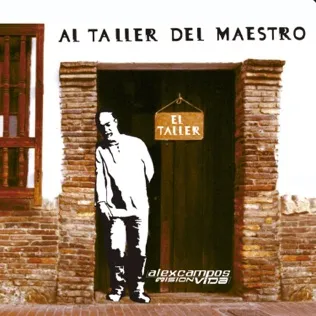
Alex Campos - ¿Qué Eres Para Mí? Lyrics

Album: Al Taller del Maestro
Released: 20 Sep 2002
iTunes Amazon Music

Lyrics


No encuentro donde ir
Si Tú no estas junto a mí
No encuentro la salida
Sin ti mi vida agoniza
No encuentro una voz
Que hable a mi vida
No encuentro unas manos
Que sanen mis heridas

Aunque yo pienso que
Tú no existías
Vengo aquí a buscar
Aquella salida
Se muy bien no lo se
Que eres para mí
Un amor, religión o solo teoría
No, No lo se

Religión se que es
Esa monotonía
Que el amor es aquel
Que dio así su vida
Aquí estoy
Otra vez
Con todas mis heridas
Que aliviasen tus heridas

aunque yo pienso que
Tú no existías
Vengo aquí a buscar
Aquella salida
Se muy bien, no lo se
Que eres para mí
Un amor, religión o solo teoría

Ven y entra a mi vida
ven a mi... corazón
No más lágrimas, mentiras,
Cansado de eso yo ya estoy

Por un toque tuyo a mi vida
Todo cambiara
Apresúrate a salvarme
Mi Señor, Mi Salvador, Mi Salvador

aunque yo pienso que
Tú no existías
Vengo aquí a buscar
Aquella salida
Se muy bien no lo se
Que eres para mí
Un amor religión o solo teoría
no lo se...

Video

Alex Campos - Qué eres para mí - El Concierto Derroche de Amor (HD)

Thumbnail for ¿Qué Eres Para Mí? video

Meaning & Inspiration

Alex Campos’s "Qué Eres Para Mí," as heard on the 2016 live album "El Concierto Derroche de Amor," is a profound exploration of spiritual seeking and surrender, a journey from doubt to profound realization. The song opens with a palpable sense of disorientation, a cry from a place of deep need where the singer feels utterly lost without a guiding presence. This initial feeling of being adrift echoes the sentiment found in Jeremiah 2:13, where the people of Israel had forsaken God, the "spring of living water," and dug for themselves "cracked cisterns that hold no water." Campos articulates this emptiness, the inability to find solace or answers, suggesting a life lived without the divine connection that gives true direction and purpose. The repeated lament of not finding a voice to speak to his soul or hands to heal his wounds powerfully conveys a yearning for something beyond the ordinary, a desperate search for wholeness that transcends earthly solutions.

The narrative then pivots, acknowledging a past intellectual resistance, the thought that "Tú no existías" – that this divine presence might not exist. Yet, despite this intellectual doubt, the heart is drawn to seek an answer, to find "aquella salida," that escape from the brokenness. This internal conflict, the mind battling with the spirit’s undeniable pull, finds resonance in the Apostle Paul's struggles, as described in Romans 7:15, where he confesses, "For I do not do the good I want, but the evil I do not want is what I keep on doing." The song’s core question, "Se muy bien no lo se, Que eres para mí / Un amor, religión o solo teoría?"—"I know well, I don't know, What you are to me / A love, religion, or just a theory?"—perfectly captures the human dilemma of trying to categorize or rationalize an encounter with the divine. It’s a struggle to place God within a box of familiar definitions when His nature often defies our limited understanding.

However, the song’s brilliance lies in its subsequent clarification. Campos distinguishes between mere "religión," which he equates with "monotonía" – a lifeless routine – and true "amor," characterized by self-sacrifice, "aquel que dio así su vida." This is a clear reference to the ultimate act of love, Jesus Christ’s sacrifice on the cross, as stated in John 15:13: "Greater love has no one than this, that someone lay down his life for his friends." The singer’s willingness to come again, "con todas mis heridas," to be healed by another’s wounds, speaks of a profound humility and recognition of dependence. It is a surrender born not from understanding all the theological intricacies, but from an overwhelming need that only a divine source can fulfill. The plea, "Ven y entra a mi vida / ven a mi... corazón," coupled with the desire for an end to "lágrimas, mentiras," and the weariness of it all, is a heartfelt invitation, mirroring David's prayer in Psalm 51:10: "Create in me a clean heart, O God, and renew a right spirit within me."

The climax of the song is an urgent cry for salvation, a realization that a single touch from this divine presence will transform everything. The repeated declaration, "Mi Señor, Mi Salvador," leaves no room for doubt about who this entity is. It's a direct acknowledgment of Jesus Christ as Lord and Savior, a title that signifies His authority and redemptive power. This transformative power is a recurring theme throughout Scripture, evident in passages like 2 Corinthians 5:17: "Therefore, if anyone is in Christ, the new creation has come: The old has gone, the new is here!" "Qué Eres Para Mí" is ultimately a testament to the relentless pursuit of truth, the courage to confront doubt, and the liberating freedom found in finally recognizing and embracing Jesus Christ not as a mere theory or a ritualistic religion, but as the divine love who gave His life and continues to offer healing, salvation, and a path out of darkness for all who turn to Him.

Loading...
In Queue
View Lyrics