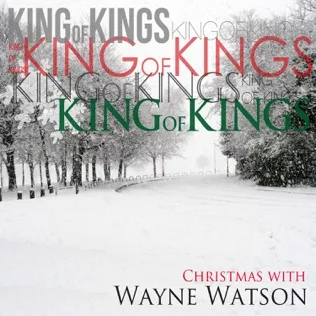
Wayne Watson - O Come O Come Emmanuel Lyrics
Lyrics
O come, O come, Emmanuel
And ransom captive Israel
That mourns in lonely exile here
Until the Son of God appear
Rejoice! Rejoice! Emmanuel
Shall come to thee, O Israel.
O come, Thou Rod of Jesse, free
Thine own from Satan's tyranny
From depths of Hell Thy people save
And give them victory o'er the grave
Rejoice! Rejoice! Emmanuel
Shall come to thee, O Israel.
O come, Thou Day-Spring, come and cheer
Our spirits by Thine advent here
Disperse the gloomy clouds of night
And death's dark shadows put to flight.
Rejoice! Rejoice! Emmanuel
Shall come to thee, O Israel.
O come, Thou Key of David, come,
And open wide our heavenly home;
Make safe the way that leads on high,
And close the path to misery.
Rejoice! Rejoice! Emmanuel
Shall come to thee, O Israel.
O come, O come, Thou Lord of might,
Who to Thy tribes, on Sinai's height,
In ancient times did'st give the Law,
In cloud, and majesty and awe.
Rejoice! Rejoice! Emmanuel
Shall come to thee, O Israel.
Video
O Come O Come Emmanuel
Meaning & Inspiration
Wayne Watson’s rendition of "O Come O Come Emmanuel," featured on the album *King of Kings (feat. Jeremy Good)* and released on September 23, 2008, brings a profound and enduring Advent hymn into contemporary focus. This song, rooted in ancient Latin O Antiphons, serves as a poignant prayer and a powerful declaration, encapsulating centuries of anticipation for the Messiah’s arrival. It’s a timeless narrative of spiritual longing and the ultimate promise of divine intervention, calling us to remember the profound significance of Christ’s first coming and to eagerly await His return.
The heart of "O Come O Come Emmanuel" lies in its repeated plea for divine presence and liberation, echoing the cries of a people in spiritual exile. The opening lines immediately set this tone, invoking "Emmanuel," a name rich with prophetic meaning from Isaiah 7:14, later fulfilled in Matthew 1:23, signifying "God with us." The song voices a universal human experience of waiting for redemption, asking God to "ransom captive Israel" – not merely a historical nation, but all who are held captive by sin and the fallen world (Romans 8:21-23). This opening verse encapsulates the deep yearning for salvation and the comfort that only the "Son of God" can bring. The subsequent refrain, "Rejoice! Rejoice! Emmanuel shall come to thee, O Israel," serves as a constant, reassuring anchor, shifting the mood from lament to expectant joy, a prophecy of certain hope.
The hymn then progresses through a series of messianic titles, each a facet of Christ’s identity and mission, deeply rooted in Old Testament prophecy. The invocation "O come, Thou Rod of Jesse" refers directly to Isaiah 11:1, proclaiming Jesus as the righteous branch stemming from David’s lineage. This title emphasizes His royal authority and His power to "free Thine own from Satan's tyranny," delivering humanity from the bondage of sin and death (Hebrews 2:14-15). The song paints a vivid picture of Christ’s victory over the grave, offering true and lasting freedom that no earthly power can provide (1 Corinthians 15:54-57).
Next, the song calls upon "Thou Day-Spring," a beautiful imagery found in Luke 1:78-79 and Zechariah 3:8, which speaks of Christ as the dawn breaking through the darkness. This title highlights His role as the bringer of light, hope, and spiritual cheer, intended to "disperse the gloomy clouds of night / And death's dark shadows put to flight." He is the light of the world, shining in the darkness, and the darkness cannot overcome Him (John 1:4-5, John 8:12). His advent brings clarity, purpose, and comfort to spirits burdened by life’s trials, leading to a new season of grace and truth.
The appeal to "Thou Key of David" from Isaiah 22:22 and Revelation 3:7 underscores Christ’s ultimate authority. As the one holding the key, He possesses the power to "open wide our heavenly home" and "make safe the way that leads on high." This speaks to His exclusive claim as the gate, the shepherd who leads His sheep to eternal pastures (John 10:9). He alone can unlock the gates of salvation, granting access to God’s presence and closing "the path to misery," offering an escape from eternal separation (Matthew 16:19, Hebrews 10:19-20). This stanza affirms Christ as the sole mediator and path to everlasting life.
Finally, the hymn addresses "Thou Lord of might," reminding us of God’s awesome power displayed at Mount Sinai, where He "did'st give the Law" to His tribes "in cloud, and majesty and awe" (Exodus 19-20, Deuteronomy 5). This powerful invocation connects the Old Covenant with the New, establishing Jesus’ divine pre-existence and His continuity with the God of Israel. It subtly reminds us that the Law, while holy, revealed humanity's inability to fully obey, thus necessitating the coming of Christ as its fulfillment and the bringer of grace (Matthew 5:17, Romans 10:4). He is the mighty God who both established the law and perfectly fulfilled it, bringing a new and better covenant (Hebrews 8:6-13).
Wayne Watson’s interpretation of "O Come O Come Emmanuel" thus transcends a simple musical performance; it becomes a profound theological reflection, a journey through centuries of hope and the ultimate fulfillment in Christ. The enduring power of this song, especially in Watson's focused arrangement, lies in its ability to draw us into this ancient longing, making the anticipation of Christ's presence deeply personal and perpetually relevant. It encourages us to find our identity in the promises of God, to understand the multifaceted nature of Christ’s redemptive work, and to live with a hopeful certainty that Emmanuel – God with us – has come, is with us now, and will come again. The message is clear: our salvation is assured, our chains are broken, and our heavenly home awaits, all through the grace of our Emmanuel.