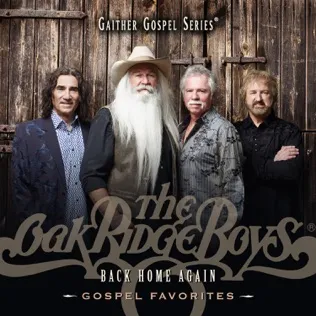
The Oak Ridge Boys - Led Out of Bondage Lyrics
Lyrics
God promised to lead His children out of bondage He said He'd free them from Pharaoh's evil hand He said He'd guide and protect them on their journey And lead them to the promised land
God's children were slaves in Egypt land So God took Moses by the hand Said, ''Moses, Tell old Pharaoh to set 'em free" But Moses wanted a way to get out Because in his mind he's beginning to doubt And he said, "Lord, old Pharaoh, He ain't gonna listen to me" Now the Lord said, ''Son, throw down that rod'' Old Moses did and he cried to God Because it turned to a snake, as evil and wicked as sin Then he cried again with an awful wail And the Lord said, "Seize him by the tail" Old Moses did and it turned to a rod again
Well, the Lord said, "Moses, I've got power I'll be with you every hour Say, ''Go tell Pharaoh to set My children free" Well, Moses did but the Lord helped out He sent a plague to the land about So old Pharaoh told him he could go, and let him be Well, they started out with a cloud that day And a fire by night to lead the way But old Pharaoh suddenly decided to change his mind So he gathered together his soldier band Got all of them chariots throughout the land Said, "I'll let them Israelites go some other time"
Well, they came to the banks of the old Red Sea Turned to Moses and started to plea And Moses fell on his knees and there in the sand The Lord said, "Moses, trust in God 'Cause all ya gotta do is just raise that rod And over these mighty waters stretch your hand" Well, Moses followed the Lord's command The waters parted and there in the sand They saw a path that led to the other shore Well, the ground was dry and they passed on through And old Pharaoh's army thought they would too But the waters fell and they ain't never been seen no more
Video
Led Out Of Bondage
Meaning & Inspiration
The Oak Ridge Boys' rendition of "Led Out of Bondage," featured on their 2012 album *Back Home Again*, serves as a powerful and enduring testament to God's faithfulness and deliverance, drawing directly from the foundational narrative of the Exodus. The song masterfully encapsulates the profound story of God's promise to liberate His people from Egyptian slavery and guide them to their promised land. It meticulously recounts the pivotal moments, from God's commission to Moses, Moses' initial doubts, and the miraculous display of power with the staff turning into a serpent, demonstrating God's inherent authority. The narrative then unfolds through the plagues sent upon Egypt, culminating in Pharaoh's reluctant release of the Israelites. The lyrics vividly portray the challenging journey, highlighting the cloud by day and fire by night as divine guidance, and crucially, the climactic parting of the Red Sea. This iconic event, where Moses stretches his hand at God's command, reveals a path through the formidable waters, allowing the Israelites to escape while ensuring the destruction of Pharaoh's pursuing army. This retelling is steeped in biblical truth, echoing themes found throughout Scripture. For instance, God's promise to deliver His people is a recurring motif, evident in His covenant with Abraham (Genesis 15:13-14) and reiterated through prophets like Isaiah, who spoke of God leading His people through difficult times (Isaiah 43:2). The initial hesitation of Moses, "Lord, old Pharaoh, He ain't gonna listen to me," reflects a human struggle with faith, a sentiment shared by many in their own trials. However, God's response, "Son, throw down that rod" and His assurance, "I'll be with you every hour," underscore the divine empowerment necessary for obedience, mirroring God's encouragement to Joshua in Joshua 1:9, "Be strong and courageous. Do not be afraid; do not be discouraged, for the Lord your God will be with you wherever you go." The plagues themselves are a direct echo of the biblical account in Exodus 7-12, showcasing God's sovereignty over the natural world and His judgment on oppressive powers. The miraculous parting of the Red Sea, a central image of divine intervention and salvation, is a powerful symbol of liberation, directly referencing the events detailed in Exodus 14. The song’s focus is squarely on this unwavering message of divine intervention, emphasizing that even in the face of overwhelming odds and human doubt, God’s promises are steadfast, and He provides the means for His people to overcome bondage and reach their intended destiny. It’s a timeless reminder that trust in God, even when faced with seemingly insurmountable obstacles, leads to ultimate freedom and a secure path forward.