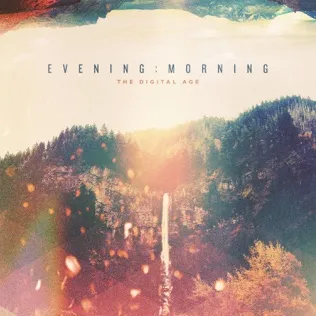
The Digital Age - Captured Lyrics

Album: Evening : Morning
Released: 13 Aug 2013
iTunes Amazon Music

Lyrics

Love
You've captured me again
Love
You steal my heart

And oh when I reach out
You're always there
You've captured me again
Oh God
You steal my heart
And oh when I reach out
You're always there

Cause love has come to rescue me
Your love has come to set me free
Your love, love is all I need
Your love
Hey!

Love
You've captured me again
Oh my God
You steal my heart
And oh when I cry out
You're always there

Cause love has come to rescue me
Your love has come to set me free
Your love, love is all I need
Your love

Your love has come to rescue me
Your love has come to set me free
Your love, love is all I need
Your love

I've never felt more found
Than when I'm lost in you
My head may spin around
Like the stars of the night sky do

Your love has come to rescue me
Your love has come to set me free
Your love, love is all I need
Your love

Your love has come to rescue me
Your love has come to set me free
Your love, love is all I need
Your love

Your love has come to rescue me
Your love has come to set me free
Your love, love is all I need
Your love

Video

The Digital Age - Captured [Official Lyric Video]

Thumbnail for Captured video

Meaning & Inspiration

Released on August 13, 2013, as part of their album *Evening : Morning*, The Digital Age delivers a profound message of divine embrace in their song "Captured." This track is an intimate exploration of a believer's ongoing surrender to God's love, framing spiritual captivity not as bondage, but as a joyful, liberating experience. From its opening lines, the song establishes a deeply personal connection, where the divine "Love" is portrayed as an irresistible force that continually draws the heart, a holy pursuit that is eagerly welcomed rather than resisted.

The initial declaration, "You've captured me again, You steal my heart," speaks to the enduring and often overwhelming nature of God's presence in a life. It reflects a recurring experience, perhaps moments of fresh revelation or renewed commitment, where the sheer goodness and power of God's love re-establish its claim on one's affections. This isn't a coercive act, but a tender, compelling invitation to relinquish control and trust in His benevolent grip, echoing the scriptural truth that no one can come to the Father unless He draws them (John 6:44). The lyrics then beautifully articulate the constancy of this divine relationship: "when I reach out, You're always there." This underscores God's unwavering faithfulness and omnipresence, a comforting reminder found throughout the Psalms that He is an ever-present help in times of trouble (Psalm 46:1) and that He promises never to leave or forsake His children (Hebrews 13:5).

The chorus serves as the cornerstone of the song's theological message, declaring, "love has come to rescue me, Your love has come to set me free, Your love, love is all I need." This encapsulates the very essence of the Gospel – the saving power of God's sacrificial love through Christ. It acknowledges a prior state of spiritual danger or bondage, from which only divine intervention could provide salvation. This freedom is not merely an absence of chains but an empowerment for a new way of life, aligning with passages like Galatians 5:1, which states that it is for freedom that Christ has set us free. Furthermore, the affirmation that "Your love, love is all I need" speaks to the complete sufficiency of God, an echo of Philippians 4:19, where God promises to supply every need according to His riches in glory. This declaration signifies a trust that transcends earthly provisions, finding ultimate satisfaction and fulfillment solely in His presence.

As the song progresses, it reiterates the theme of God's responsiveness, transitioning to "when I cry out, You're always there." This poignant phrase emphasizes the accessibility of God in moments of vulnerability and distress, confirming that His ear is open to our prayers. It brings to mind verses such as Psalm 34:17-18, where the righteous cry out, and the Lord hears them and delivers them from all their troubles, being close to the brokenhearted and saving those who are crushed in spirit. The profound bridge then introduces a beautiful paradox: "I've never felt more found than when I'm lost in You." This imagery speaks to the transformative experience of complete surrender to God. To be "lost in God" is not to disappear but to find true identity, purpose, and peace within His boundless being, a concept reflected in the scripture where losing one's life for Christ's sake leads to finding it (Matthew 10:39). The subsequent line, "My head may spin around like the stars of the night sky do," captures the awe and wonder that often accompanies a deep encounter with the Creator. It suggests that human understanding can be overwhelmed by the vastness and glory of God, yet within that divine mystery, there is an anchor, a grounding more profound than any earthly certainty. This spiritual vertigo is not disorienting in a negative sense, but rather a humbling recognition of God's infinite majesty and the smallness of our own comprehension in comparison to His eternal wisdom. "Captured" ultimately serves as an inspiring anthem for anyone who has experienced the relentless, freeing, and endlessly satisfying embrace of God's love.

Loading...
In Queue
View Lyrics