Fountainview Academy - I'll Go Where You Want Me to Go Lyrics
Lyrics
It may not be on the mountain’s height,
Or over the stormy sea;
It may not be at the battle’s front,
My Lord will have need of me;
But if by a still, small voice He calls,
To paths that I do not know,
I’ll answer, dear Lord, with my hand in Thine,
I’ll go where You want me to go.
I’ll go where You want me to go, dear Lord,
O’er mountain, or plain, or sea;
I’ll say what You want me to say, dear Lord,
I’ll be what You want me to be.
Perhaps today there are loving words
Which Jesus would have me speak;
There may be now in the paths of sin,
Some wand’rer whom I should seek;
O Savior, if Thou wilt be my guide,
Though dark and rugged the way,
My voice shall echo Thy message sweet,
I’ll say what You want me to say.
There’s surely somewhere a lowly place,
In earth’s harvest fields so white,
Where I may labor through life’s short day,
For Jesus the Crucified;
So trusting my all to Thy tender care,
And knowing Thou lovest me,
I’ll do Thy will with a heart sincere,
I’ll be what You want me to be.
Video
I'll Go Where You Want Me to Go | Fountainview Academy | Help in Daily Living
Meaning & Inspiration
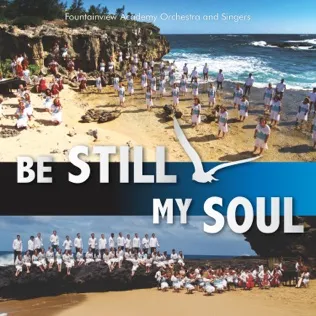
Fountainview Academy’s rendition of "I'll Go Where You Want Me to Go," released on January 1, 2010, as part of their album *Be Still My Soul*, presents a timeless and profound reflection on Christian discipleship. This classic hymn, brought to life with Fountainview Academy's signature vocal purity, transcends mere musical performance to offer a powerful declaration of spiritual surrender. At its core, the song articulates a soul's willingness to abandon personal ambition and perceived significance, choosing instead complete obedience to divine leading, no matter how humble or unseen the call may be. It gracefully redirects the human inclination towards grand, visible endeavors, emphasizing that true purpose is found in aligning with God's perfect, often subtle, plan.
The opening verses immediately challenge the notion that God's calling is always to the dramatic or the prominent, stating, "It may not be on the mountain’s height, Or over the stormy sea; It may not be at the battle’s front, My Lord will have need of me." This sentiment beautifully echoes the New Testament's teaching on the body of Christ, where every member, regardless of perceived status, is indispensable for the whole (1 Corinthians 12:22-24). The song acknowledges a universal desire for impactful service yet underscores that God often calls us to roles that may seem less glorious, but are nonetheless vital in His kingdom. The phrase, "But if by a still, small voice He calls, To paths that I do not know," reflects a deep trust in God's personal and gentle guidance, reminiscent of Elijah's encounter with the Lord not in wind, earthquake, or fire, but in a quiet whisper (1 Kings 19:12). This call to an unknown future necessitates a radical faith, a trusting in the Lord with all one's heart rather than leaning on personal understanding, fully assured that He will make straight the path (Proverbs 3:5-6), even when the destination remains a mystery.
The repeating chorus serves as the song's unwavering anchor, a comprehensive pledge of submission: "I’ll go where You want me to go, dear Lord, O’er mountain, or plain, or sea; I’ll say what You want me to say, dear Lord, I’ll be what You want me to be." This triple affirmation encapsulates a holistic commitment to Christ, encompassing every aspect of existence – movement, speech, and identity. It is a daily taking up of one's cross and following Him (Luke 9:23), a genuine expression of love demonstrated through obedience to His commandments (John 14:15). The imagery of "mountain, or plain, or sea" signifies a boundless willingness to follow wherever God leads, acknowledging that no place is beyond His reach or purpose, much like David's reflection that there is nowhere one can flee from God's Spirit (Psalm 139:7-10). The readiness to "say what You want me to say" speaks to a desire for one's words to align with divine truth, reflecting Christ's own example of speaking only what the Father commanded (John 12:49-50). And to "be what You want me to be" is the ultimate transformation, allowing God to mold and shape one's character into His likeness, a true embodiment of being a doer of the Word, not merely a hearer (James 1:22).
The song then moves from a posture of individual surrender to an active commission, acknowledging the world's deep need: "Perhaps today there are loving words Which Jesus would have me speak; There may be now in the paths of sin, Some wand’rer whom I should seek." This segment highlights the practical outworking of discipleship – speaking words that build up and impart grace (Ephesians 4:29) and actively seeking those lost in spiritual darkness, mirroring Jesus's own mission to seek and save the lost (Luke 19:10). The acknowledgement that the path might be "dark and rugged the way" does not deter the resolve, but rather underscores the necessity of divine guidance. Relying on the Savior as a guide through life’s inevitable tribulations offers comfort and strength, much like the promise in Psalm 23:4 that even in the valley of the shadow of death, God's presence dispels fear. Through every challenge, the commitment remains to let one's "voice shall echo Thy message sweet," becoming a clear conduit for God's redemptive truth.
Finally, the hymn brings us to the profound calling of laboring for Christ: "There’s surely somewhere a lowly place, In earth’s harvest fields so white, Where I may labor through life’s short day, For Jesus the Crucified." This vividly paints a picture of urgent, purposeful work within the spiritual harvest fields that are ripe for reaping (John 4:35; Matthew 9:37-38). Life's brevity underscores the importance of diligently serving Christ, working heartily "as for the Lord and not for men" (Colossians 3:23-24). The song culminates in a powerful declaration of foundational trust: "So trusting my all to Thy tender care, And knowing Thou lovest me, I’ll do Thy will with a heart sincere, I’ll be what You want me to be." This final stanza grounds all obedience and service in the unwavering assurance of God's tender care and immutable love (Romans 8:38-39). It is not fear or obligation, but a profound understanding of divine affection that motivates a sincere heart to do God's will, becoming fully the person He intends. Fountainview Academy's presentation of "I'll Go Where You Want Me to Go" serves as a timeless inspiration, calling individuals to embrace a life of humble, joyful, and complete surrender, finding ultimate fulfillment not in self-direction, but in being wholly used by the One who loves them most.